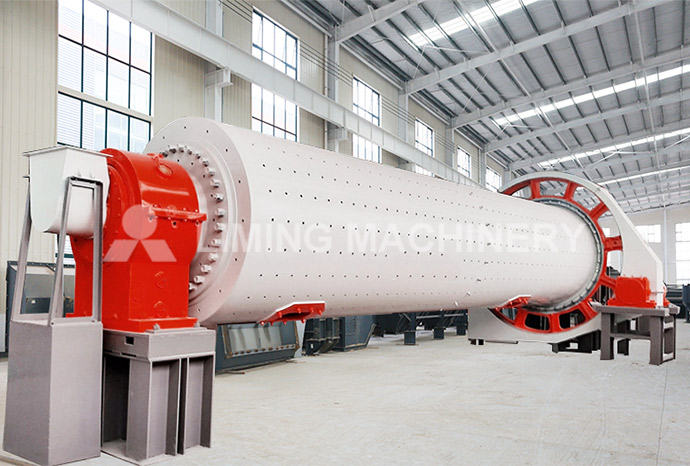
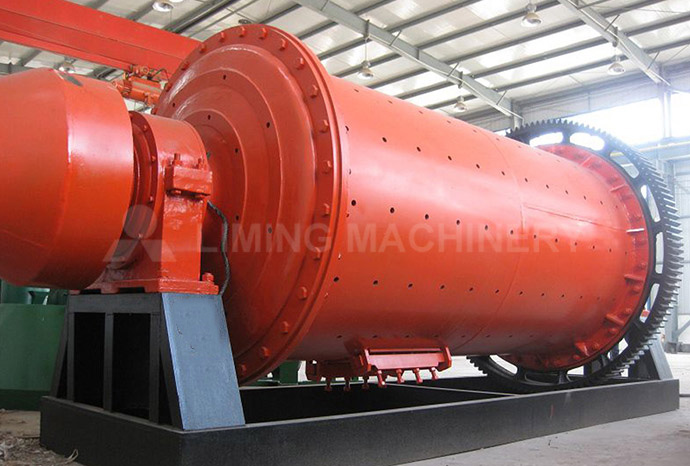
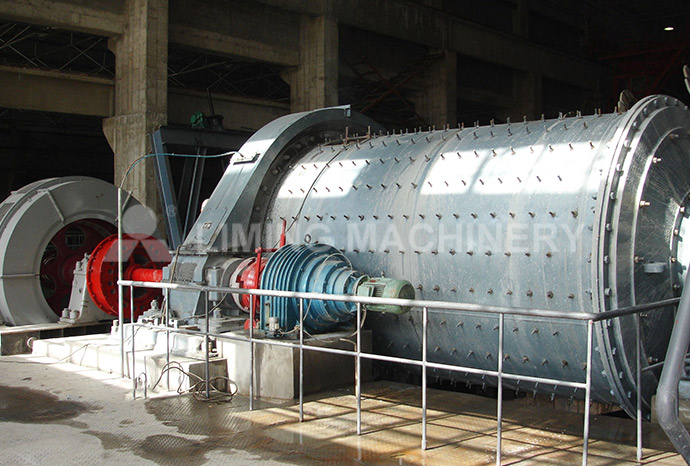
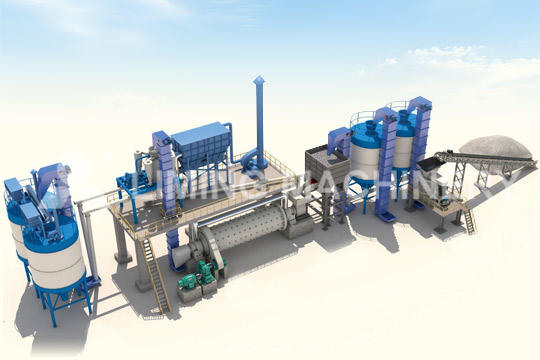
Cement clinker is more difficult to grind compared to raw materials, and has higher wear consumption on the lining and steel balls of the ball mill. Therefore, high manganese wear-resistant lining plates are needed with higher wear resistance internally. Ball mills are widely used due to their convenient maintenance and low price.


 1.
High grinding efficiency and low maintenance cost.
2.
The product has uniform fineness and smooth.
3.
Low vibration, good equipment sealing, no dust overflow, environment friendly.
4.
Fineness and production capacity can be adjusted within a certain range.
 Working Principle

Clinker Ball Mill usually have 2 to 4 chambers, and materials are evenly fed into the first chamber of the ball mill through the feeding screw by the feeding device. The chamber has a stepped lining plate and is filled with grinding media of different specifications. The rotation of the cylinder generates centrifugal force, which brings the grinding media to a certain height and then falls down, causing impact and grinding on the materials. After rough grinding is completed in chamber 1, the material enters the next chamber through the partition plate. This chamber is lined with corrugation or flat lining plates and contains grinding media for further grinding of the material; Powdered materials are discharged through the discharge comb board to complete the grinding process.

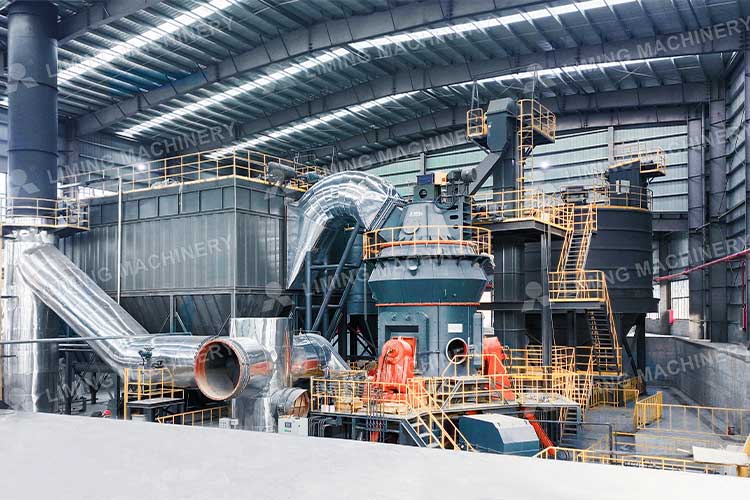
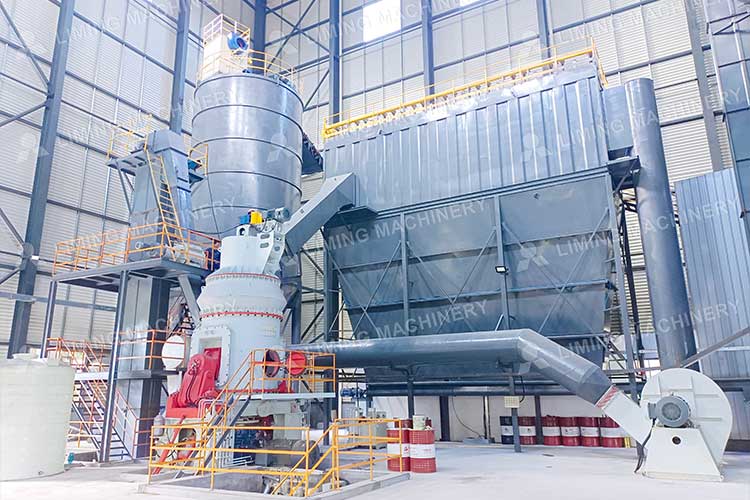
The TGM trapezoidal mill adopts a compact vertical structure, occupying a smaller overall space than ball mill systems of the same production capacity, and the height requirement of the plant is moderate. The weight of each model of the whole machine inc
Qualified ultrafine powder enters the cyclone and pulse collector for gas-solid separation and is discharged by a rotary valve. As the powder is extremely fine, ton-bags or vacuum packing with pneumatic conveying to silos is used; negative pressure ensur
Please provide target daily capacity, limestone lab report (CaO, MgO, SiO₂, sulfur impurity), lump‑size range of feed limestone, available fuel type & calorific value, plant site dimension & elevation, local power‑supply parameter, target lime activity index, and scope of supply including preheater, cooler and dust collector. Also clarify demands for general‑layout drawing and on‑site commissioning. Complete data supports correct kiln sizing and full process proposal.
The MTW6X Fully Thin-Oil Lubricated Intelligent European Grinding Mill adopts the bevel-gear integral drive inherited from the European mill series. The main motor drives the central shaft via a reducer, giving a shorter chain and more precise ratio with
NK plant belongs to semi‑trailer‑type equipment, transported by trailer as whole or split modules. Check overall dimension and axle load to comply with national over‑limit highway regulations. Some over‑width/over‑height modules require disasse
The Raymond Mill feed size is generally below 20–30 mm (varying by model); oversize raises roller impact and wear. Pre-crush with a jaw crusher for stable operation and longer life of scrapers, rollers and other wear parts.
RELATED CASE
 Request a quotation


Copyright © LIMING MACHINERY CO., LTD. All rights reserved Privacy Policy